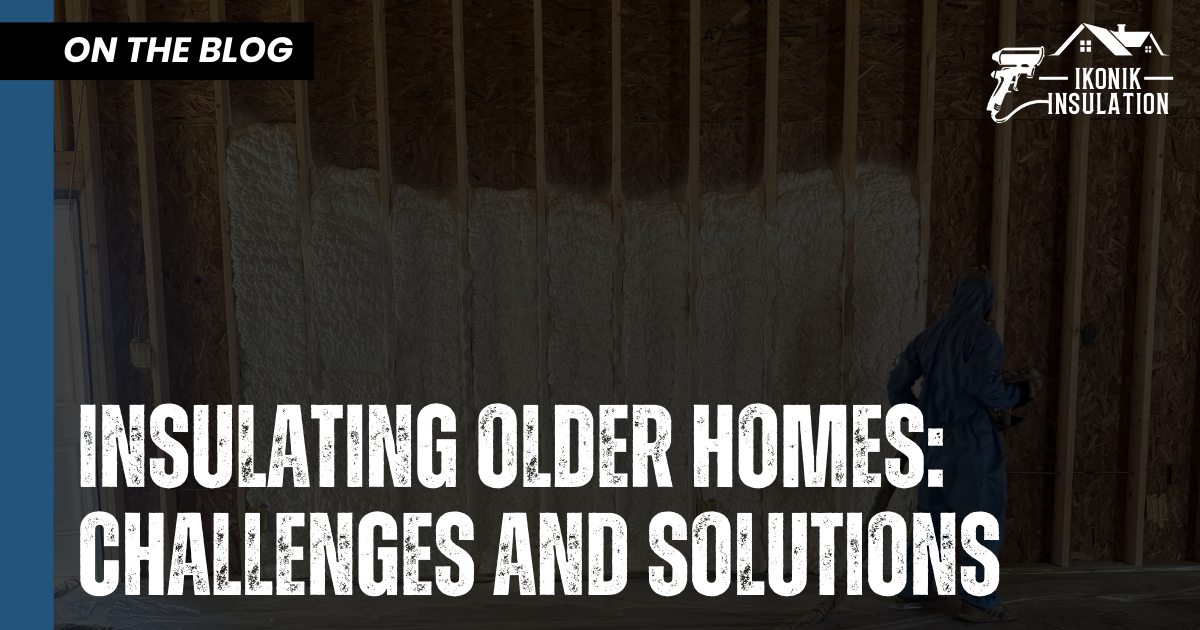
Insulating Older Homes: Challenges and Solutions
Insulating Older Homes: Challenges and Solutions
By Brandon Stringfellow | Ikonik Insulation
Older homes have character. They have history, craftsmanship, and details you don't often see in new construction. But they also come with challenges, and insulation is near the top of the list.
Many homes in Mount Carmel, Princeton, and the surrounding communities were built decades ago, when energy was cheap and building codes were less demanding. These homes often have minimal insulation, outdated materials, or no insulation at all in key areas.
If you own an older home and struggle with drafts, uneven temperatures, or high energy bills, you're not alone.
The good news is that older homes can absolutely be insulated effectively. It just requires understanding the unique challenges involved and choosing the right solutions.
Common Challenges in Older Homes
Solutions That Work
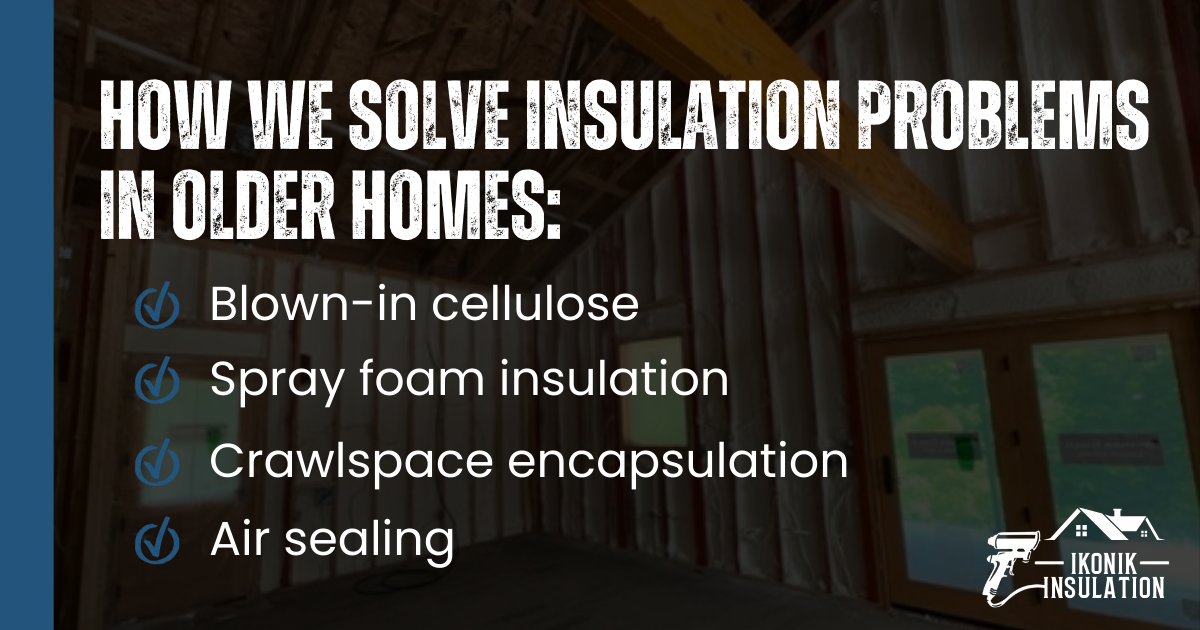
The key to insulating older homes is choosing materials and methods that work with the existing structure rather than against it. Here are the approaches that tend to work best.
Blown-in cellulose is often the ideal choice for retrofitting older homes. This material can be installed through small holes drilled in walls or blown into attics without requiring demolition. Because cellulose is loose-fill, it conforms to irregular cavities and fills gaps that batt insulation would miss. It's also made from recycled materials, fire-resistant, and provides excellent thermal performance with an R-value of 3.2 to 3.8 per inch.
Spray foam insulation is another powerful option, especially for areas where air sealing is critical. Open-cell spray foam expands to fill every crack and crevice, creating both insulation and an air barrier in one application. Closed-cell foam adds a moisture barrier as well, which can be valuable in crawlspaces or areas prone to dampness. Spray foam works well in older homes because it adapts to irregular framing and hard-to-reach spaces.
Crawlspace encapsulation addresses a problem that's especially common in older homes. Many were built with vented crawlspaces that allow moisture, humidity, and pests to enter freely. Encapsulating the crawlspace with a vapor barrier, combined with insulation, transforms this vulnerable area into a controlled environment that protects your home from the ground up.
Air sealing should accompany any insulation project in an older home. Before adding insulation, it's important to identify and seal the gaps where air is escaping. Common trouble spots include attic hatches, recessed lights, plumbing and electrical penetrations, and the gaps where walls meet floors and ceilings. Sealing these leaks dramatically improves the effectiveness of your insulation.
Where to Start
If you own an older home and you're not sure where to begin, the attic is usually the best place to start. Heat rises, and an under-insulated attic is often the single biggest source of energy loss in older homes. Upgrading attic insulation tends to deliver the fastest payback in terms of comfort and energy savings.
Next, look at your crawlspace if you have one. Moisture problems that start in the crawlspace can affect your entire home, from musty odors and high humidity to structural damage over time. Addressing the crawlspace early prevents bigger problems down the road.
Walls can be more challenging to address, but blown-in insulation makes it possible without major renovation. A professional can assess whether your walls are worth insulating based on their current condition and your overall energy goals.
Working With What You Have
Older homes require a different approach than new construction, but that doesn't mean they can't be comfortable and energy-efficient. With the right materials and an experienced team, it's possible to dramatically improve insulation without compromising the character that makes your home special.
At Ikonik Insulation, we work with homeowners throughout Mount Carmel, IL, Princeton, IN, and surrounding areas to find practical solutions for older homes. We understand the unique challenges these properties present, and we take the time to assess each home individually rather than applying a one-size-fits-all approach.
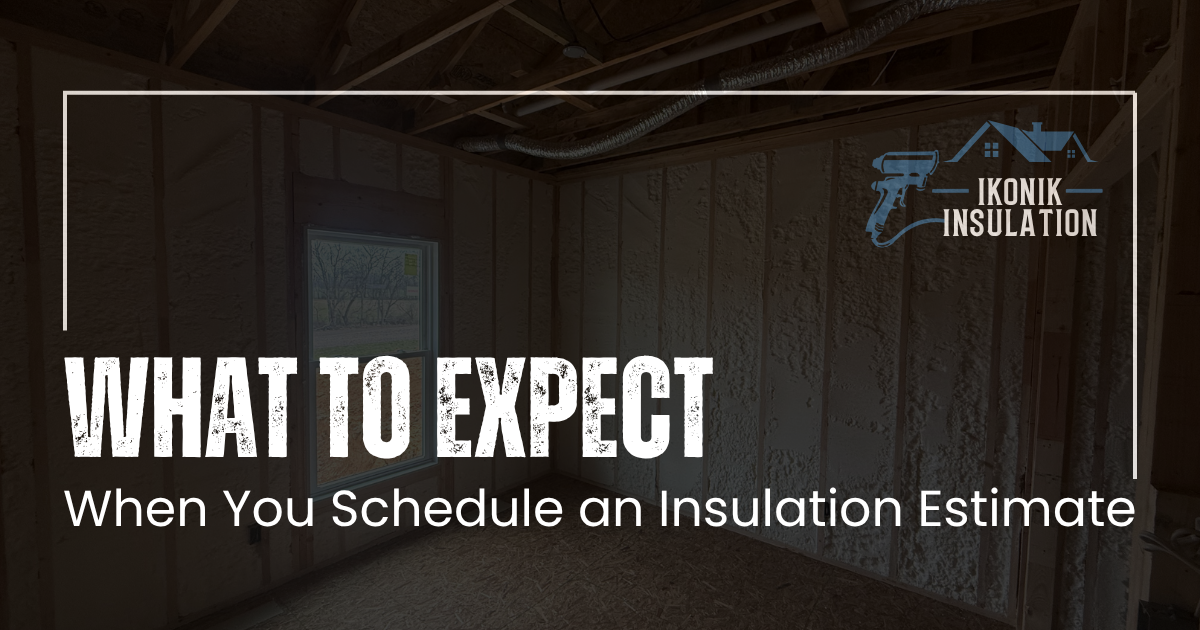
If your older home is costing you money and comfort, let's talk. Call us at 618-240-9893 to schedule an estimate. We'll help you understand your options and create a plan that works for your home and your budget.