Insulation Myths Exposed: What Homeowners Get Wrong
Insulation Myths Exposed: What Homeowners Get Wrong
When it comes to home insulation, there's no shortage of opinions. Some of what you hear from neighbors, read online, or remember from years past is solid advice. But a surprising amount of it is outdated, oversimplified, or just plain wrong.
These myths can lead homeowners to make poor decisions, waste money, or miss out on real opportunities to improve their comfort and energy efficiency. Let's set the record straight on some of the most common insulation misconceptions.
Myth #1: Insulation Is Only About Staying Warm in Winter
Myth #2: More Insulation Is Always Better
The Truth: There's a point of diminishing returns. While under-insulated homes are common, piling on excessive insulation doesn't continue to pay off proportionally. Each additional inch of insulation provides less benefit than the one before it.
The key is reaching the recommended R-value for your climate zone and addressing air sealing at the same time. In our area of Illinois and Indiana, attics should generally have R-49 to R-60 insulation. Going well beyond that rarely makes financial sense, especially if you haven't addressed air leaks first. A home with R-38 and good air sealing will often outperform one with R-60 and gaps everywhere.
Myth #3: New Homes Don't Need Insulation Upgrades
The Truth: New doesn't always mean well-insulated. Building codes set minimum standards, not optimal ones. Many new homes are built to meet code requirements and nothing more. Builders working on tight margins may use the least expensive insulation options and installation methods.
We've seen newer homes with gaps in insulation coverage, compressed batts that reduce R-value, and minimal attention to air sealing. If your new home has rooms that are hard to keep comfortable or energy bills that seem higher than expected, the insulation may not be performing as well as you assumed.
Myth #4: All Insulation Types Perform the Same
The Truth: Different insulation materials have different strengths. Fiberglass batts, cellulose, and spray foam all provide thermal resistance, but they do it differently and excel in different applications.
Fiberglass batts are affordable and work well in standard wall cavities and new construction. Cellulose is excellent for retrofitting because it fills irregular spaces and settles into gaps. Spray foam provides the highest R-value per inch and creates an air seal that other materials can't match.
Choosing the right material depends on your specific situation: the area being insulated, whether it's new construction or a retrofit, your budget, and your goals. There's no single best insulation for every job.
Myth #5: You Can Tell If Your Home Needs Insulation Just by Looking
The Truth: Most insulation problems are invisible. Unless you're climbing into your attic with a flashlight or crawling through your crawlspace, you can't see what's happening in the hidden spaces of your home. Even then, it takes experience to recognize problems like settled insulation, moisture damage, or inadequate coverage.
The symptoms of poor insulation are easier to notice than the insulation itself: uneven temperatures, drafts, high energy bills, ice dams in winter, or a home that just never feels comfortable. If you're experiencing these issues, the insulation may be the culprit even if everything looks fine from the outside.
Myth #6: Insulation Lasts Forever
The Truth: Insulation can degrade over time. While quality insulation can last for decades, it doesn't last forever. Fiberglass batts can sag, compress, or get damaged by moisture and pests. Cellulose can settle and lose effectiveness. Even spray foam can be affected by extreme conditions over many years.
If your home is more than 20 or 30 years old and still has its original insulation, it's worth having it inspected. What was installed decades ago may no longer be performing the way it should, and insulation standards have improved significantly since then.
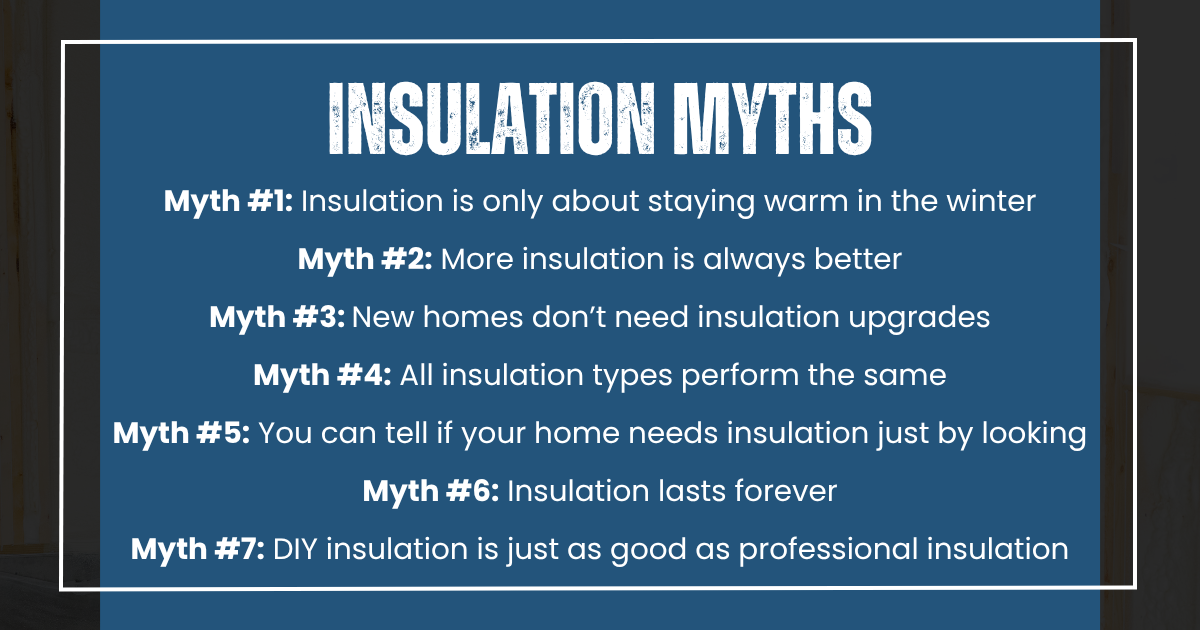
Myth #7: DIY Insulation Is Just as Good as Professional Installation
The Truth: Installation quality matters as much as the material itself. Insulation that's compressed, has gaps, or doesn't fully cover the intended area won't perform to its rated R-value. Professional installers know how to achieve full coverage, work around obstacles, and address air sealing at the same time.
This is especially true for spray foam, which requires specialized equipment and training to apply correctly. But even batt insulation, which seems straightforward, is often installed poorly by DIYers who don't account for electrical boxes, pipes, and other obstructions.
Get the Facts for Your Home
Every home is different, and the best way to cut through the myths is to have a professional assess your specific situation. At Ikonik Insulation, we help homeowners throughout Mount Carmel, IL, Princeton, IN, and surrounding areas understand what's really going on with their insulation and what improvements will make the biggest difference.
Have questions about your home's insulation? Call us at 618-240-9893 to schedule an estimate. We're happy to separate fact from fiction and help you make informed decisions.