Insulating Your Pole Barn or Metal Building: What You Need to Know
Insulating Your Pole Barn or Metal Building: What You Need to Know
By Brandon Stringfellow | Ikonik Insulation
Pole barns and metal buildings are everywhere in our part of Illinois and Indiana. They're used as workshops, storage buildings, agricultural facilities, garages, and even living spaces. They're practical, affordable to build, and versatile.
But if you've ever spent time in an uninsulated pole barn, you know the downside. They're freezing in winter and sweltering in summer. Metal conducts heat efficiently, which means the building absorbs heat from the sun and radiates cold from the air with very little resistance. Without insulation, these structures are uncomfortable for much of the year.
The good news is that pole barns and metal buildings can be insulated effectively. The approach is a little different from insulating a traditional wood-framed home, but the results can be just as good. Here's what you need to know.
Why Metal Buildings Need Special Consideration
Metal buildings present some unique challenges when it comes to insulation. The biggest one is condensation. Metal surfaces are prone to sweating when warm, moist air meets the cold metal. This condensation can drip onto equipment, vehicles, and stored items. Over time, it can lead to rust and corrosion on the building itself.
Another challenge is thermal bridging. In a metal building, the steel framing conducts heat directly from inside to outside (or vice versa). Traditional batt insulation placed between purlins still leaves the metal framing exposed, creating pathways for heat transfer that reduce overall performance.
Finally, many pole barns have irregular framing, open ceilings, and exposed structural elements that make installing traditional insulation more complicated.
Insulation Options for Pole Barns and Metal Buildings
Several insulation types can work in metal buildings, but some perform better than others depending on your goals.
Spray Foam Insulation
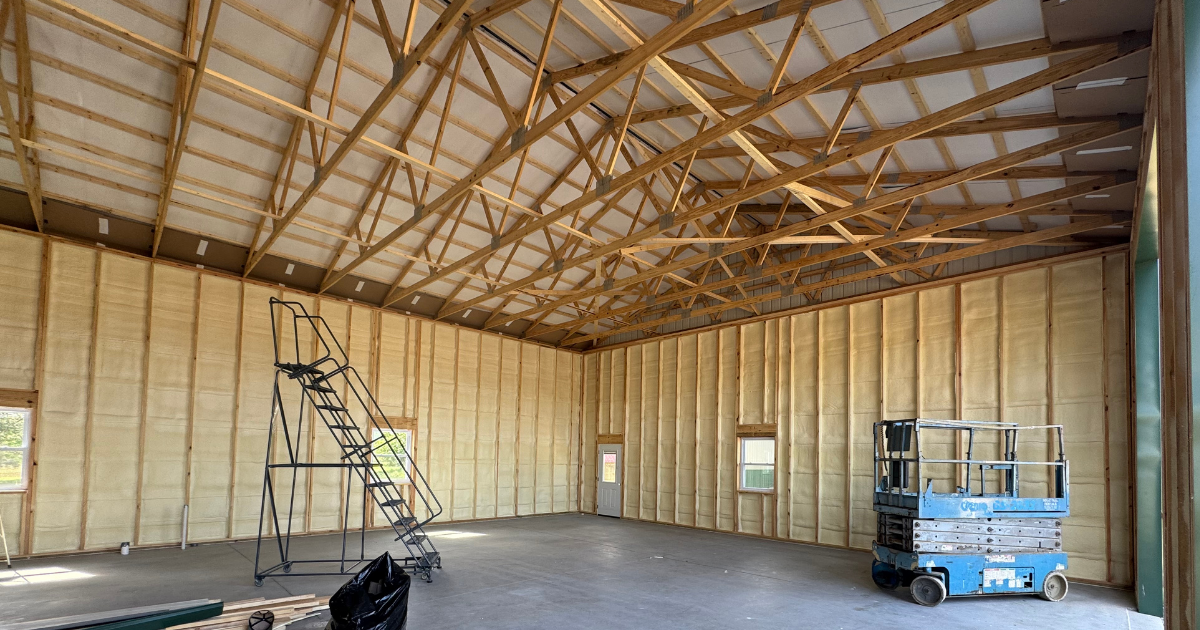
Spray foam is often the best choice for metal buildings, and it's the option we recommend most frequently for these applications. When applied directly to the metal panels, spray foam creates a continuous layer of insulation with no gaps or seams. It adheres to the metal surface and expands to fill every crevice.
Closed-cell spray foam is particularly effective because it serves multiple purposes at once. It insulates with an R-value of 6 to 7 per inch. It creates an air barrier that stops drafts. And it acts as a vapor barrier that prevents condensation from forming on the metal.
This condensation control is a major advantage. Because closed-cell spray foam prevents warm, moist air from reaching the cold metal surface, you don't get the dripping and sweating problems that plague many metal buildings.
Batt Insulation
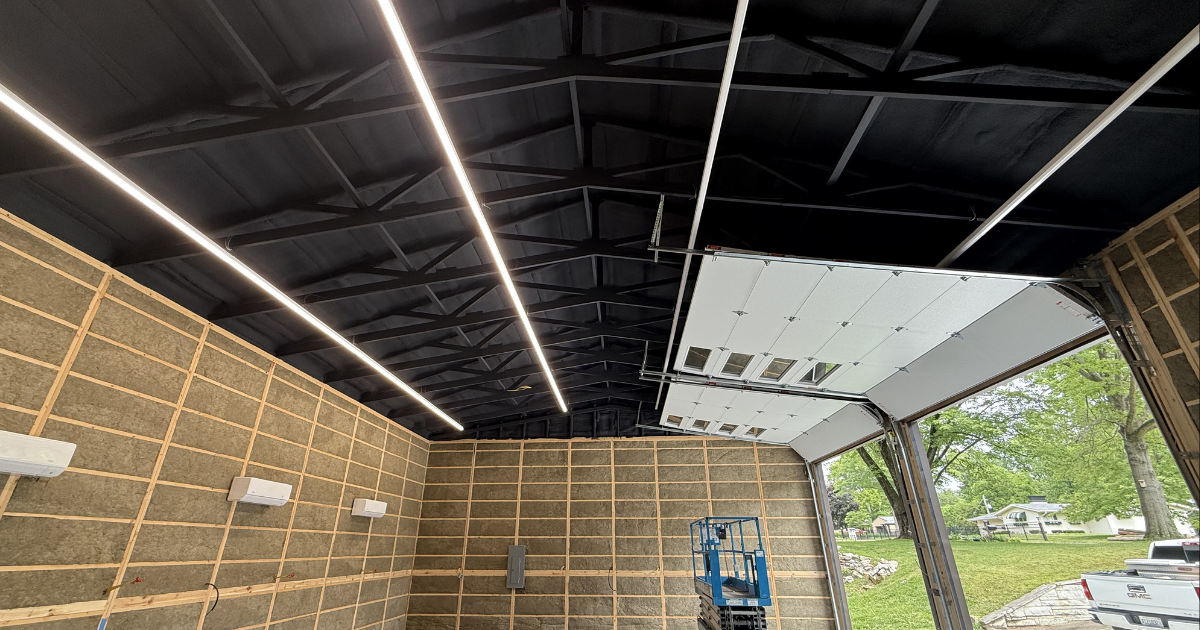
Fiberglass or mineral wool batts can be used in pole barns, typically installed between the wall girts and roof purlins. This is a more affordable option than spray foam, and it can work well in certain situations.
However, batt insulation in metal buildings has limitations. It doesn't stop air movement, so you may still have drafts. It doesn't prevent condensation on its own, so a separate vapor barrier is needed. And it's difficult to install without leaving gaps around the framing, which reduces effectiveness.
If budget is a primary concern, batts with a properly installed vapor barrier can be a reasonable solution for buildings that don't need to maintain precise temperatures.
Blown-In Insulation
For pole barns with enclosed wall cavities, blown-in cellulose or fiberglass can be an option. This works similarly to insulating walls in a traditional home. However, many pole barns have open wall construction that doesn't lend itself to blown-in applications.
Key Considerations Before You Insulate
Before insulating your pole barn or metal building, there are a few things to think through.
What will you use the building for? A building used for occasional storage has different needs than a workshop where you'll spend hours at a time. If you're planning to heat or cool the space, investing in quality insulation makes sense. If it's just protecting equipment from the elements, you may not need as much.
Will you be heating or cooling the space? If yes, air sealing becomes important. There's no point in paying to condition air that's going to leak out through gaps in the building envelope. Spray foam handles this automatically. Other insulation types require separate air sealing work.
Is condensation currently a problem? If you're seeing moisture on the metal surfaces, that needs to be addressed as part of any insulation project. Adding insulation without controlling condensation can actually make moisture problems worse by trapping humidity inside the building.
What's your budget? Spray foam costs more upfront but delivers better performance and eliminates the need for separate vapor barriers. Batt insulation costs less but requires more careful installation and additional materials to perform well.
The Installation Process
Insulating a pole barn is typically faster than insulating a home because the structure is more open and accessible. For spray foam applications, the foam is applied directly to the interior surface of the metal panels on walls and roof. It cures quickly and is usually ready for use within a day or two.
For batt installations, the batts are cut to fit between framing members and secured in place. A vapor barrier is then installed over the insulation to protect against moisture.
The timeline depends on the size of the building and the complexity of the work, but most pole barn insulation projects can be completed in a few days.
Making Your Building Comfortable Year-Round
A well-insulated pole barn or metal building becomes a genuinely useful space in every season. You can work in your shop during January without freezing. You can store temperature-sensitive items without worry. If you add heating or cooling, it actually works efficiently instead of fighting a losing battle against the elements.
At Ikonik Insulation, we've insulated pole barns, shops, garages, and agricultural buildings throughout Mount Carmel, IL, Princeton, IN, and the surrounding communities. We understand the unique challenges these structures present and can recommend the best approach for your specific building and goals.
Thinking about insulating your pole barn or metal building? Call us at 618-240-9893 to schedule an estimate. We'd be happy to take a look and help you figure out the best solution.